More Road, More Glide
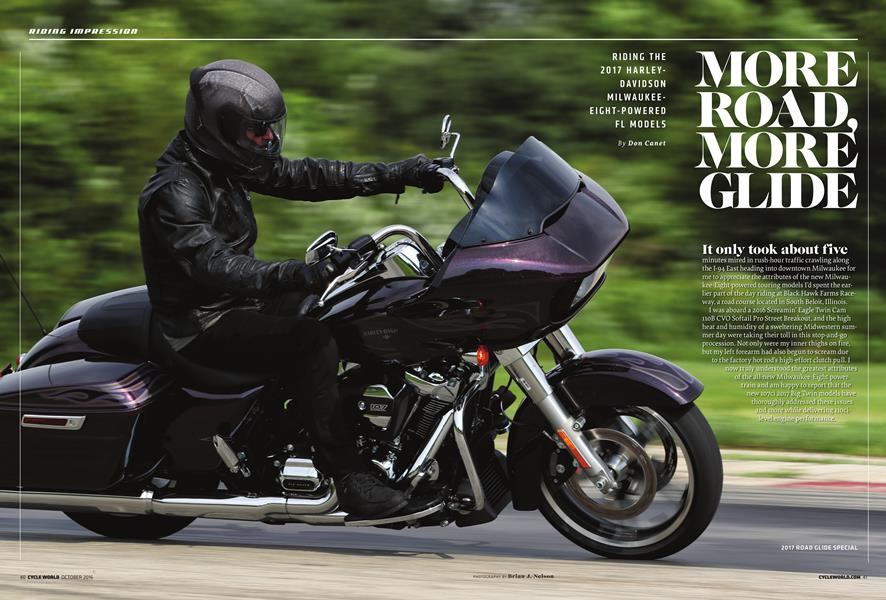
MORE ROAD, MORE GLIDE
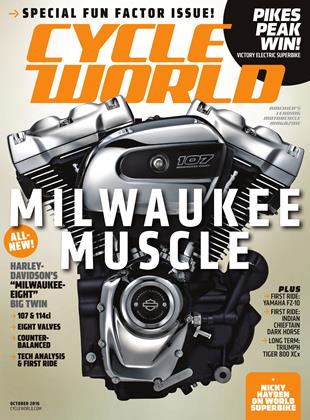
RIDING THE 2017 HARLEY-DAVIDSON MILWAUKEE-EIGHT-POWERED FL MODELS
Don Canet
It only took about five
minutes mired in rush-hour traffic crawling along the I-94 East heading into downtown Milwaukee for me to appreciate the attributes of the new Milwaukee-Eight-powered touring models I’d spent the earlier part of the day riding at Black Hawk Farms Race-way, a road course located in South Beloit, Illinois.
I was aboard a 2016 Screamin’ Eagle Twin Cam 110B CVO Softail Pro Street Breakout, and the high heat and humidity of a sweltering Midwestern summer day were taking their toll in this stop-and-go procession. Not only were my inner thighs on fire, but my left forearm had also begun to scream due to the factory hot rod’s high-effort clutch pull. I now truly understood the greatest attributes of the all-new Milwaukee-Eight powertrain and am happy to report that the new 107CÍ 2017 Big Twin models have thoroughly addressed these issues and more while delivering nocilevel engine performance.
RIDING
IMPRESSION
Although our saddle time was relatively brief at this top-secret earlyaccess test, I can attest to the claims of improved power, efficiency, and heat reduction.
Relocating the rear exhaust header and catalyzer further from the rider’s right calf is something any rider and passenger will be able to feel and appreciate. The new slipper/assist clutch not only provides lighter action than that of current 103CÍ models, but its need for fewer clutch plates has reduced engine width at the clutch housing and results in notably less heat felt when planting a left foot at stops. And thanks to that narrowness, shorter riders will also find it an easier reach to the ground. While the cockpit and riding position remain unchanged throughout the touring line, the new slimmer airbox also proved non-intrusive for this 5-foot10 rider’s right knee.
All good, but how does it run?
Thumbing the start button cranks the engine to life in a less laborious fashion than typical of previous Big Twins. You immediately notice much less audible mechanical clatter, allowing the patent voice of the exhaust note to command center stage as the engine settles into a
now-lower 850-rpm idle when warmed. Despite the heat-reducing lower idle speed, the engine now idles in a more rhythmic fashion. There’s still a very positive engagement into low gear. The hydraulically actuated clutch provides predictable engagement feel pulling away from a stop and overall shift action is now smoother than ever, a tribute to the addition of an anti-backlash-gear treatment given the six-speed gearbox.
With a threat of rain looming, we rode brief three-lap stints, rotating through 107CÍ and 114.CÍ CVO versions of the Road Glide, Street Glide, and Ultra Limited, plus a 107CÍ Road King for good measure.
This included a standing-start launch and hard acceleration through the bottom gears aboard each. Performance felt improved over previous 103 models, but there was no backto-back testing with Twin Cam-powered tourers during our time on the new bikes. We’ll do an instrumented test once we get hands on a test unit back home.
What I can say for now is that each bike I rode pulled cleanly from low revs to its 5,500-rpm redline, displaying impressive grunt (and even a bit more with the 114.CÍ CVO models) while maintaining crystal clearrearview-mirror smoothness. The ability to chug along at basement revs in a tall gear has improved (the ride-by-wire
system automatically raising idle rpm a couple hundred rpm while the bike is moving)—just don’t expect to idle along happily in fourth gear or taller without applying a hint of additional throttle. But smoothness and chuggability at around 1,500 rpm in a tall gear is better versus the last Twin Cams. Thank the new counterbalancer in the MilwaukeeEight, plus the quicker, more stable combustion supplied by the twin-spark plug heads.
While the frame and Dunlop tires remain the same, ride quality and stability has been notably improved with the
new Showa fork and recalibrated shocks, the latter with knob-adjustable mechanical spring preload tunability. Chassis composure was at a new level while hustling these big boys around the track at a pace one might only tempt in pursuit of a wildcard awarded the first to complete the chapter’s annual poker run. Admittedly it’s hard to suppress the inner racer when candy-stripe apex curbs are present, but I also rode several laps at a simulated street pace and checked for heat at a prolong stop. I came away pleased with the way each member of the rubbermount family performed—nice turn-in both on or off the brakes and trustworthy midcorner feel. The linked ABS brake system also benefits from an updated Bosch unit with refined calibration offering more intuitive braking control.
All told, the Milwaukee-Eight is a big step forward for Harley-Davidson, lending its Big Twin legs and refinement to carry it well into the future. CUM