Art Deco For Dummies
Art Deco for Dummies
What the Hey's a Delahaye?
To people who pay attention to such matters, the term “Art Deco” conjures clear images of a specific type of classic design. But for the rest of us, what does that name mean and where did it come from?
Though this category of styling originated at the turn of the 20th century, it didn’t gain prominence until 1925 at the Exposition Internationale des Arts Décoratifs et
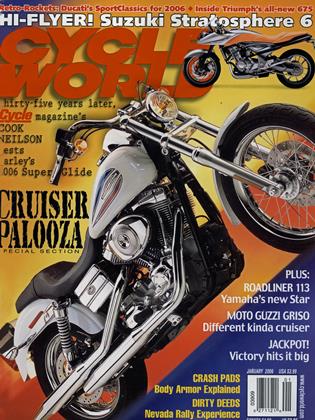
CRUISER PALOOZA SPECIAL SECTION
Industriels Modernes held in Paris. Countless examples of that organic, streamlined styling were exhibited there; and from that point until the late 1930s, societies worldwide witnessed an onslaught of similar designs with a distinctive flair that changed forever the way people think about industrial and commercial style.
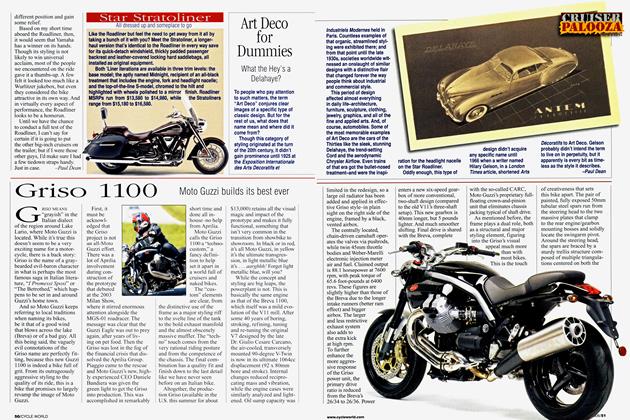
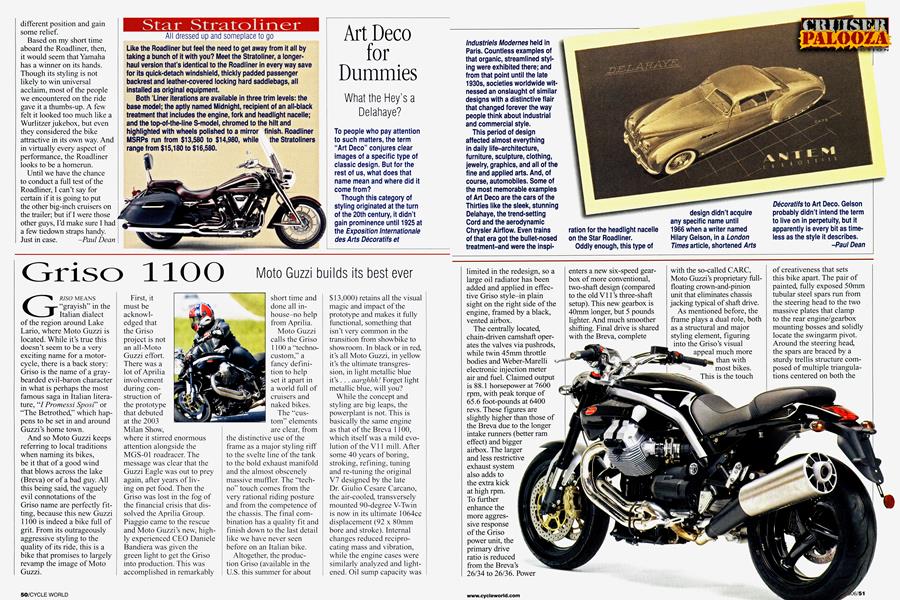
This period of design affected almost everything in daily life-architecture, furniture, sculpture, clothing, jewelry, graphics, and all of the fine and applied arts. And, of course, automobiles. Some of the most memorable examples of Art Deco are the cars of the Thirties like the sleek, stunning Delahaye, the trend-setting Cord and the aerodynamic Chrysler Airflow. Even trains of that era got the bullet-nosed treatment-and were the inspi-
ration for the headlight nacelle on the Star Roadliner.
Oddly enough, this type of
design didn’t acquire any specific name until 1966 when a writer named Hilary Gelson, in a London Times article, shortened Arts
Decoratifs to Art Deco. Gelson probably didn’t intend the term to live on in perpetuity, but it apparently is every bit as timeless as the style it describes.
Paul Dean