Suzuki Rm80 And Yamaha Yz80
SUZUKI RM80 AND YAMAHA YZ80
Cycle WORLD Mini Test
Two Tiny Terrors with Race-Winning Power.
“Parental Guidance Suggested’’
Christmas past is safely in the past and Christmas future is ’way off there somewhere, many moons from now. Surely at this moment no kids are thinking about Christmas presents, namely minicycles.
It is therefore safe to report on the Suzuki RM80 and Yamaha YZ80, two of the best minicycles ever made.
Why the caution? Put it down to surprise. The last time this magazine looked at minicycles, that type machine was a pretty basic piece of equipment. Small motorcycles were generally built at lowest possible cost. They had small engines adapted from industrial units, squeaky little shocks and sometimes forks with springs only. Because they had no power to speak of, they didn’t go very fast and thus could get away with minimum brakes and suspension, all for a few bucks. When it came time for the kid to get a motorcycle, dad went down to the store and picked out a tiddler and the kid zipped around the vacant lot next door and fell over at seven mph until he learned how to ride.
That was some years back. Since that time, due to other circumstances, the people who work here either have no children, small children or children well past the age of buy-me-a-motorcycle. Thus the staff had no firsthand knowledge of the minicycle world, beyond knowing in a vague way that there are a lot of kids racing motocross on smallish bikes.
One day the Suzuki truck pulled up and, delivered an RM80. Cute little thing, we chuckled, looks just like a real' racer except it’s scaled down. What will we do with it? Try it, said Suzuki.
So we kicked the engine into life . . . and clerks two offices away came and begged for relief.
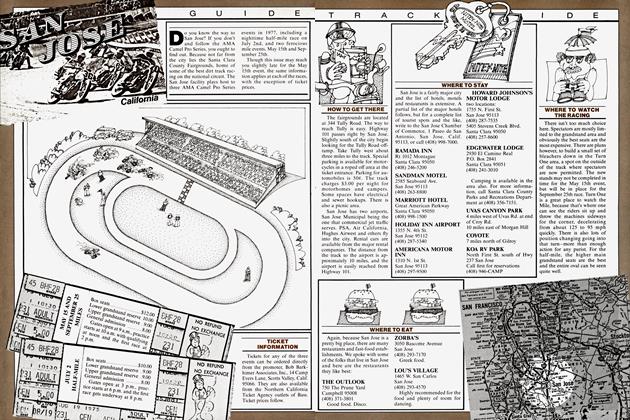
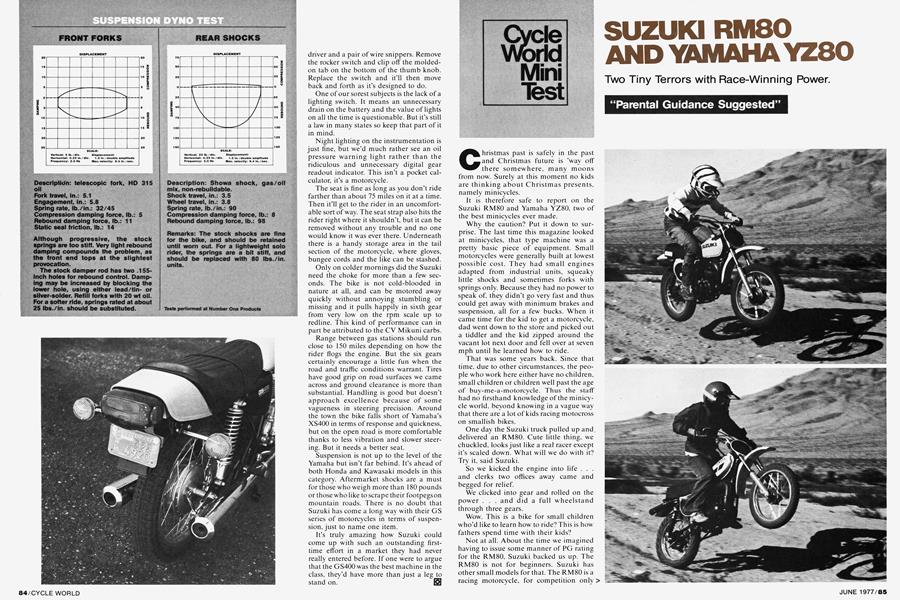
We clicked into gear and rolled on the power . . . and did a full wheelstand through three gears.
Wow. This is a bike for small children who’d like to learn how to ride? This is how fathers spend time with their kids?
Not at all. About the time we imagined having to issue some manner of PG rating for the RM80, Suzuki backed us up. The RM80 is not for beginners. Suzuki has other small models for that. The RM80 is a racing motorcycle, for competition only and for riders who are experienced although small.
A few telephone calls turned up a similar machine from Yamaha, the YZ80. Just as with the Suzuki and its model designation, the YZ80 is a pure racer. It doesn’t have a monoshock but in nearly every other way, the YZ80 is like its bigger brothers, a racing machine designed for competition and not designed for play riding or for novices.
These are not the only small motorcycles on the market, but nearly as we could learn, the others are either limited-production models, hard to find in most areas, or they are milder engines which can be tuned for racing but which don’t come race-ready from the factory.
This thus becomes a two-bike comparative impression; no figures, no lap times, no points keeping.
The RM80 and YZ80 are remarkably close in specifications, surely because both factories have been competing in this field for several years and both know what works and what doesn’t.
Both are scaled down versions of adult racing bikes. The scale is not to scale, so to speak, in that an engine half the displacement of the adult version doesn't allow half the wheelbase or half the weight. Instead, the 80s have half the engine, 3/4 of the weight, 9/10 of the wheelbase, 5/6 of the seat height, 3/5 of the wheel travel, etc.
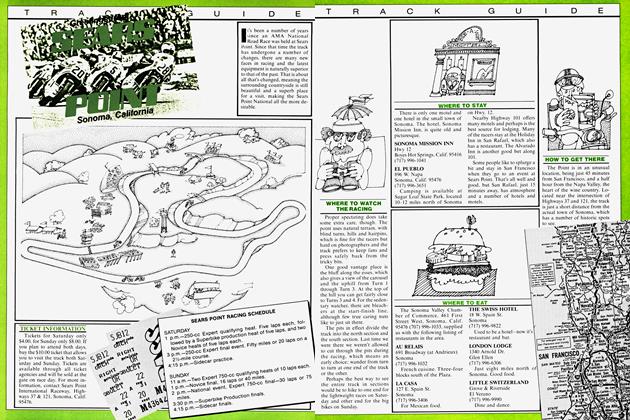
The sizes are nearly the only differences between the 80s and 125s, 250s and open class motocrossers. Suzuki and Yamaha both use 79-cc engines with the latest factory mods, a reed valve in the intake tract for Yamaha and dual valve to piston ports and case for Suzuki. Both are well turned out, with neat welds and a high level of quality control everywhere we looked.
The sizes are nearly the only differences between the 80s and 125s, 250s and open class motocrossers. Suzuki and Yamaha both use 79-cc engines with the latest factory mods, a reed valve in the intake tract in Yamaha’s case and the dual valve to piston ports and to the case for Suzuki. Both are well turned out, with neat welds and a high level of quality control everywhere we looked.
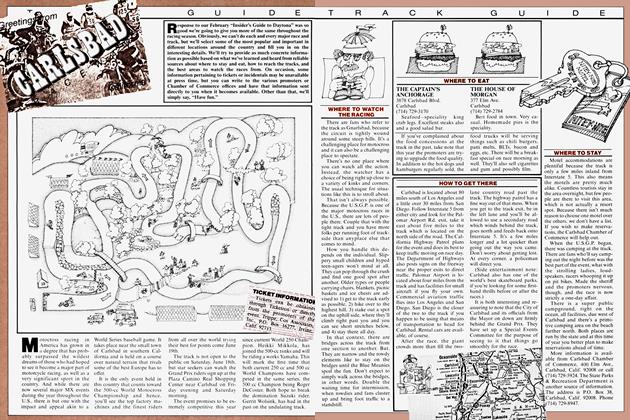
If there is any area in which the factory has not supplied the latest developments, it would be in the area of suspension. Only in degree, though. Yamaha provides Kayaba oil/gas rear shocks, while Suzuki’s are plain old oil with air. And neither mini has pressurized air in the forks. Both bikes have the scaled-down equivalent of long travel suspension, approximately 5 in. in front and 4 in back, so they are on a par with the big factory bikes of only a year or so ago.
The first impression of this cute little Suzuki—which instantly leaped forward with power far beyond its displacementconvinced the staff to abandon the original idea of rounding up the younger staff kids and neighbor kids and taking them off for some riding lessons and impressions.
The next idea went down the tubes as soon as the adults had a chance to ride the racers in the dirt. An adult cannot do these machines justice. We are too big. Even a 150 lb. man is too large for a 140 lb. racing motorcycle. To stand up is to raise the total center of gravity above the handlebars. Body english works too well. Riding fast with such a tiny, darty little rig is a display of a motorcycle being faster than the human hand. And anyway, the weight alone would mean we’d never actually know how quick these racers are.
Speaking of speed, neither factory supplies claimed horsepower figures. Yamaha does list 5.8 lb./ft. of torque and an rpm figure of 10,000 rpm. They don’t say whether this is torque peak or power peak or redline, but running the torque figure and the rpm figure through the normal equation for power gives an estimate of 11.05 bhp. This from 79 cc. The Suzuki seems to have more power than that, proving as a guess that the factory 80 cc racing bikes are tuned as highly and as well as the 125s and 250s sold as racing machines.
The actual test involved three young racers, experienced desert and motocross competitors, aged 10, 12 and 14. Each was of normal size and weight for his age. and each kid said the seat height, handlebar width, peg location et al fitted him just fine: Both machines have been laid out for this age group.
In terms of reliability, we couldn’t use the bikes for our usual length of time, so it’s hard to draw the usual conclusion. The kids ran three full tanks of premix through both bikes in the course of a long day, and nothing fell off or malfunctioned in any way. Parents in the audience will accept our judgement that the RM80 and YZ80 seem to be as strong as the average teen-age rider, that is, very strong indeed.
In terms of speed and power, the Suzuki has more sheer performance and the Yamaha has more useful punch. The kids and even the adults found the Yamaha could be used as a play bike, ridden at less than full speed with no falling off the pipe or coming onto the pipe with a burst of flying front wheel. The Suzuki has a smaller carburetor and the engines are so close in compression ratio that this difference must be a result of radical porting on Suzuki’s part.
Whatever, the straight-line drag races usually began with the YZ80 getting a short lead while the RM spun and shrieked. If there was traction for full power starts, or if the better kid was on the RM and could keep power and bite matched to each other, the Suzuki would beat the Yamaha by 3-4 lengths in 100 yards. Against that, the Yamaha has taller gears (we suspect it turns a few less revs, too although there were no tachometers to prove it) and the YZ has more top speed than the RM has. Again, the RM is tuned for track racing only, where getting up to speed is more important than what that speed is.
Braking worked out close to what the full scale motocrossers had, maybe one year ago. Both 80s have fine front brakes, with lining area and lever ratios adjusted for the tire’s grip, the expected surface and the rider’s strength. They stop quickly and with control. In back, the Suzuki did a shade better, because at that last final increment of pressure, the YZ tended to lock and skip, as did the larger YZ line until the 1977s arrived.
If any concessions have been made for rider size, they have been made in handling. That doesn’t mean they handle less well than a larger motocross machine. Instead, wheel travel has been kept to enough and less than it could be. Longer travel would raise the center of gravity and make turning and steering perhaps more
of a challenge than 14-year-olds need. Steering rake is steeper than you’d find in a grown-up toy. again so the bike will turn on demand. The steeper rake works fine here, as top speed is naturally less than for a 125 or 250.
Both 80s corner well, with neither end of either bike breaking loose before the other end. The RM appeared to have a slight edge in speed, as the extra power shot the tyke out of the turns when the rider used his gears right, which these riders did. And because of the added horse or two, the Suzuki could be powered into a dirt-track slide.
The Yamaha was easier to ride, probably because the kids didn’t need to be quite so correct with gears and power application. The YZ doesn’t bog, nor does it get away from the operator at WOT.
An impromptu motocross course brought all this out, as the RM was consistently faster than the YZ once the kids got used to the hotter mini. (One of the test riders in fact races an RM but it’s older than the test model and in mini racing, too, every new challenger has a good edge on the older version.)
At the end of the session, all three kids said they’d rather have an RM, not only because it had the edge in competitive qualities but also because when you become a skilled rider, a challenging bike is more fun to ride. The YZ is a fine bike, probably better for a good younger rider who isn't ready for high pressure racing.
One of the factory men who knew we’d approach these motorcycles with a theme of PG. Parental Guidance Suggested, commented that psychology being what it is, our judgement that mini racers should not be ridden by novice riders likely would compel the kids in the other direction: If the hot factory models are too much for most kids, they are just right for me.
It’s a risk we’ll take. It’s a choice for parents . . . and if you hide this issue, kid, we’ll ground you for a month.
Meanwhile, there are kids who are incredibly good riders, and parents who believe the kids should be racing and should have the best machine available.
Mini motocross is a tough league. In some areas not even the latest YZ or RM will win in stock form.
In those circles. ...