The Steen Ss Hodaka
THE STEEN SS HODAKA
The Ready Made Desert Racer
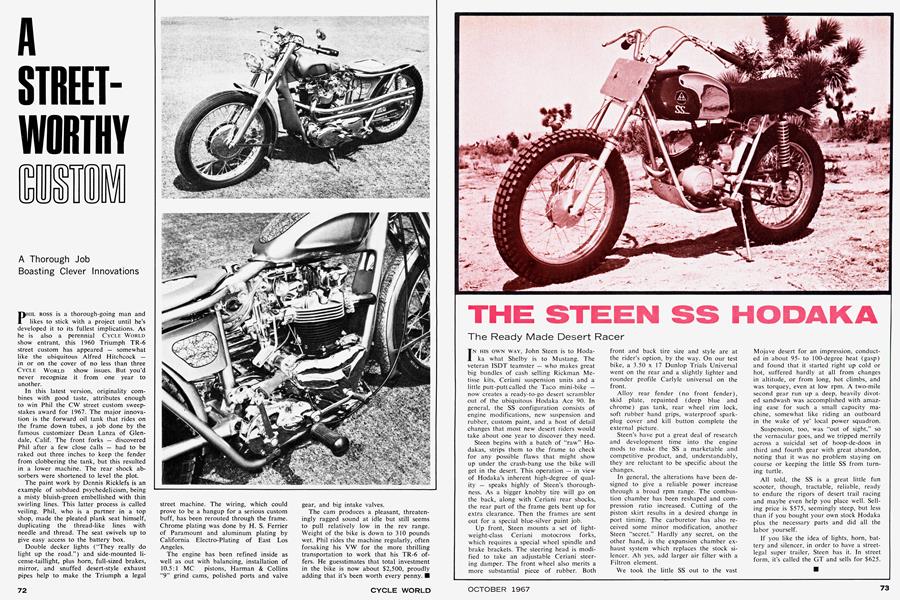
IN HIS OWN WAY, John Steen is to Hoda-ka what Shelby is to Mustang. The veteran ISDT teamster — who makes great big bundles of cash selling Rickman Me-tisse kits, Ceriani suspension units and a little putt-puttcalled the Taco mini-bike — now creates a ready-to-go desert scrambler out of the ubiquitous Hodaka Ace 90. In general, the SS configuration consists of engine modifications, new suspension and rubber, custom paint, and a host of detail changes that most new desert riders would take about one year to discover they need.
Steen begins with a batch of “raw” Hodakas, strips them to the frame to check for any possible flaws that might show up under the crash-bang use the bike will get in the desert. This operation — in view of Hodaka’s inherent high-degree of quality — speaks highly of Steen’s thoroughness. As a bigger knobby tire will go on the back, along with Ceriani rear shocks, the rear part of the frame gets bent up for extra clearance. Then the frames are sent out for a special blue-silver paint job.
Up front, Steen mounts a set of lightweight-class Ceriani motocross forks, which requires a special wheel spindle and brake brackets. The steering head is modified to take an adjustable Ceriani steering damper. The front wheel also merits a more substantial piece of rubber. Both front and back tire size and style are at the rider’s option, by the way. On our test bike, a 3.50 x 17 Dunlop Trials Universal went on the rear and a slightly lighter and rounder profile Carlyle universal on the front.
Alloy rear fender (no front fender), skid plate, repainted (deep blue and chrome) gas tank, rear wheel rim lock, soft rubber hand grips, waterproof sparkplug cover and kill button complete the external picture.
Steen’s have put a great deal of research and development time into the engine mods to make the SS a marketable and competitive product, and, understandably, they are reluctant to be specific about the changes.
In general, the alterations have been designed to give a reliable power increase through a broad rpm range. The combustion chamber has been reshaped and compression ratio increased. Cutting of the piston skirt results in a desired change in port timing. The carburetor has also received some minor modification, another Steen “secret.” Hardly any secret, on the other hand, is the expansion chamber exhaust system which replaces the stock silencer. Ah yes, add larger air filter with a Filtron element.
We took the little SS out to the vast Mojave desert for an impression, conducted in about 95to 100-degree heat (gasp) and found that it started right up cold or hot, suffered hardly at all from changes in altitude, or from long, hot climbs, and was torquey, even at low rpm. A two-mile second gear run up a deep, heavily divoted sandwash was accomplished with amazing ease for such a small capacity machine, somewhat like riding an outboard in the wake of ye’ local power squadron.
Suspension, too, was “out of sight,” so the vernacular goes, and we tripped merrily across a suicidal set of hoop-de-doos in third and fourth gear with great abandon, noting that it was no problem staying on course or keeping the little SS from turning turtle.
All told, the SS is a great little fun scooter, though, tractable, reliable, ready to endure the rigors of desert trail racing and maybe even help you place well. Selling price is $575, seemingly steep, but less than if you bought your own stock Hodaka plus the necessary parts and did all the labor yourself.
If you like the idea of lights, horn, battery and silencer, in order to have a streetlegal super trailer, Steen has it. In street form, it’s called the GT and sells for $625.