Van Tech Moto-Cross 80
VAN TECH MOTO-CROSS 80
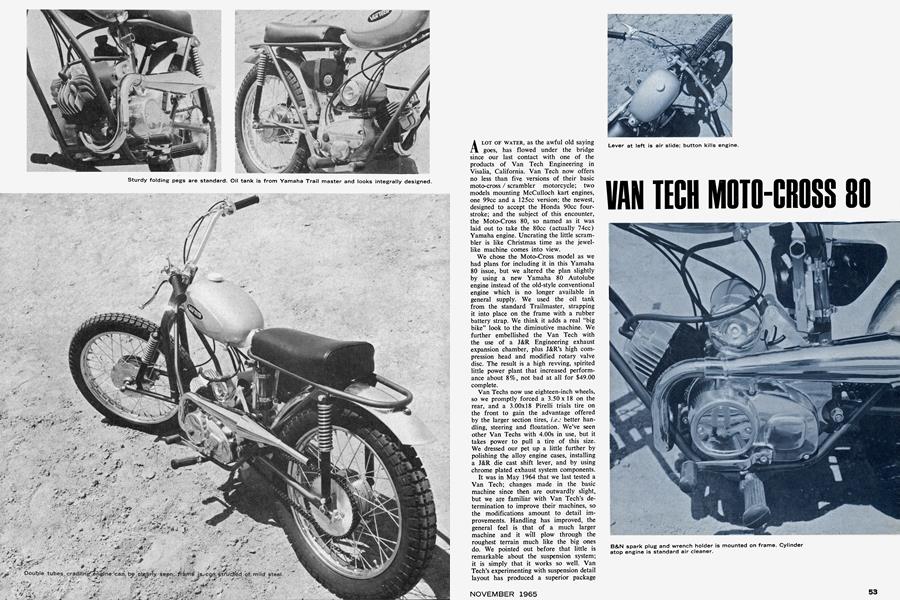
A LOT OF WATER, as the awful old saying goes, has flowed under the bridge since our last contact with one of the products of Van Tech Engineering in Visalia, California. Van Tech now offers no less than five versions of their basic moto-cross / scrambler motorcycle; two models mounting McCulloch kart engines, one 99cc and a 125cc version; the newest, designed to accept the Honda 90cc fourstroke; and the subject of this encounter, the Moto-Cross 80, so named as it was laid out to take the 80cc (actually 74cc) Yamaha engine. Uncrating the little scrambler is like Christmas time as the jewellike machine comes into view.
We chose the Moto-Cross model as we had plans for including it in this Yamaha 80 issue, but we altered the plan slightly by using a new Yamaha 80 Autolube engine instead of the old-style conventional engine which is no longer available in general supply. We used the oil tanlç from the standard Trailmaster, strapping it into place on the frame with a rubber battery strap. We think it adds a real "big bike" look to the diminutive machine. We further embellished the Van Tech with the use of a J&R Engineering exhaust expansion chamber, plus J&R's high compression head and modified rotary valve disc. The result is a high revving, spirited little power plant that increased performance about 8%, not bad at all for $49.00 complete.
Van Techs now use eighteen-inch wheels, so we promptly forced a 3.50 x 18 on the rear, and a 3.00x18 Pirelli trials tire on the front to gain the advantage offered by the larger section tires, i.e.: better handling, steering and floatation. We've seen other Van Techs with 4.00s in use, but it takes power to pull a tire of this size. We dressed our pet up a little further by polishing the alloy engine cases, installing a J&R die cast shift lever, and by using chrome plated exhaust system components.
It was in May 1964 that we last tested a Van Tech; changes made in the basic machine since then are outwardly slight, but we are familiar with Van Tech's determination to improve their machines, so the modifications amount to detail improvements. Handling has improved, the general feel is that of a much larger machine and it will plow through the roughest terrain much like the big ones do. We pointed out before that little is remarkable about the suspension system; it is simply that it works so well. Van Tech's experimenting with suspension detail layout has produced a superior package that we might even go so far as to say is the best handling lightweight we have ever ridden. Some experienced riders of big machines might counter with the challenge that it hasn't enough power to really tell if it handles, or to get into trouble for that matter. Nothing, in fact, could be farther from the truth; we have spent endless hours analyzing handling characteristics of many machines. Regardless of their size or power, frame and suspension design are the determining factors in good handling.
One area that Van Techs have not changed is their superb finish. All joints are fish-mouthed and welded, then detailed in a fine manner. No slip-shod areas can be found, and we cannot curb our enthusiasm for Van Tech's very proper attention to detail. It almost hurt to take the machine out into the dirt and soil it with dust and mud, much less to fall down and scar it up a little. It's a bit like taking a custom bike trailing. Not that this should be construed as an endorsement, but so taken with the bike was the Editor/Publisher that he bought it and added it to an illustrious collection of stellar machines.
We like what Bill Van Tichelt, the power behind all this, is doing. He is building what amounts to almost the last American-built motorcycle. Wheels, shocks and a few other pieces are Japanese or English made, as is the engine in the Yamaha model, but it is an American machine in almost every way. Indeed, it is as American as several of the British-built scrambles motorcycles are truly British since only a handful of the makers in that country build the entire machine, buying many component parts, including engines, wheels and brakes, shocks, etc., and hanging them onto their frames. Actually, Van Tech is an American Cotton, Dot or James.
Exciting is the news that shortly they will have a 250cc version, powered by a yet to be announced engine. Van Tech showed a prototype at the CYCLE WORLD show earlier this year at the Los Angeles Sports Arena, and it was received with almost wild acclaim. We will by all means do a road test the instant one is available. Perhaps this glowing report reads a bit like more of a testimony than an analysis; it is simply that we can find little to criticize and we must be honest. Price is the only area we take issue with; Van Techs are very dear. But the reasons are obvious; this kind of quality of construction, design and finish come high. There are other similar machines priced at quite a bit less, but they cannot compare. •